


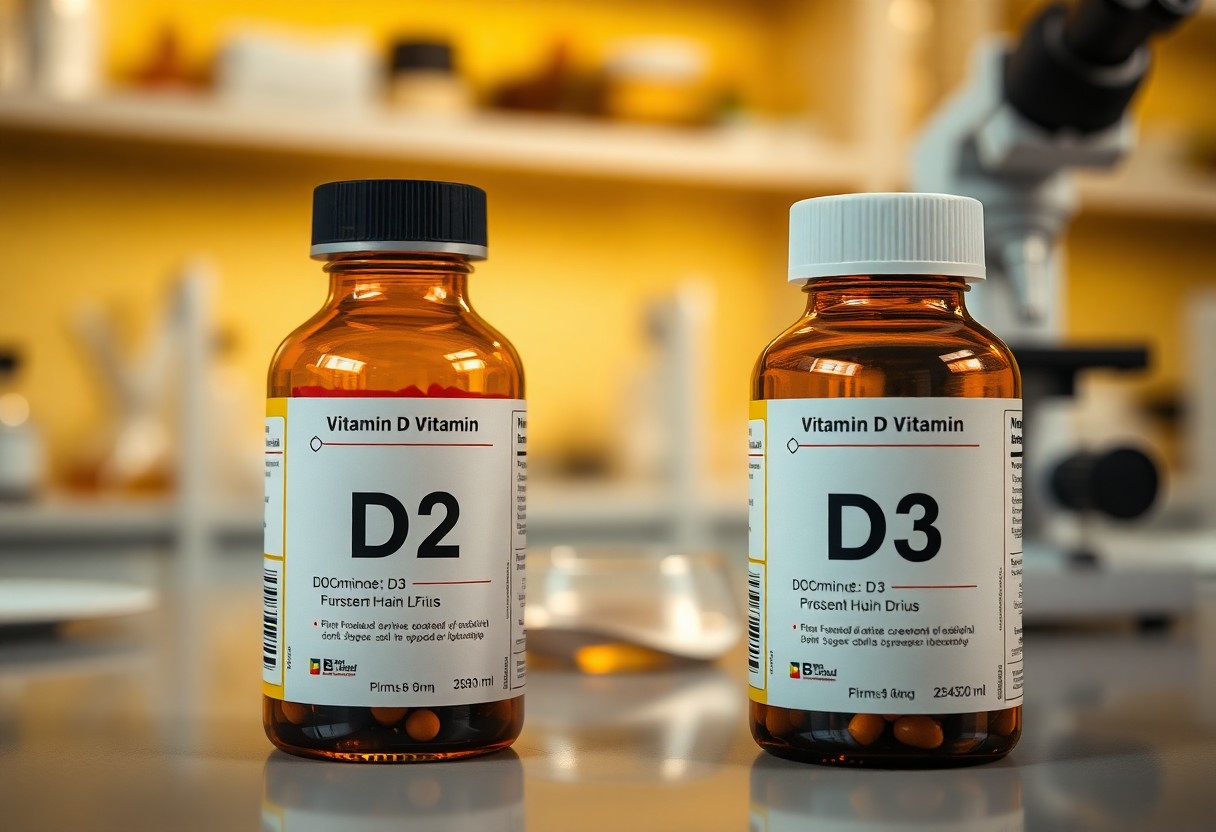
Just like you, your body needs Vitamin D for several vital functions, including bone health and immune support. The two primary forms of Vitamin D are ergocalciferol (Vitamin D2) and cholecalciferol (Vitamin D3), each obtained from different sources. While Vitamin D2 is typically found in fortified foods and some mushrooms, Vitamin D3 is generated when your skin is exposed to sunlight and is more potent at raising your blood levels of this imperative nutrient. Understanding these differences can help you make informed decisions about your Vitamin D intake.
The Biochemical Foundations of Vitamin D
Our understanding of Vitamin D encompasses two key forms, each with unique pathways to synthesis and sources. Cholecalciferol (Vitamin D3) is produced in the skin upon exposure to sunlight, while ergocalciferol (Vitamin D2) is derived from yeast and fungi. Both forms undergo conversion in the body, transforming into the active hormone calcitriol, but they differ significantly in their sources and effectiveness. Grasping these distinctions is important for optimizing our Vitamin D intake.
Cholecalciferol (Vitamin D3): Synthesis and Sources
You can synthesize cholecalciferol (Vitamin D3) naturally in your skin through exposure to ultraviolet B (UVB) rays from sunlight. This process begins when 7-dehydrocholesterol in the skin absorbs UVB light, leading to the conversion into D3. Food sources of Vitamin D3 include fatty fish, egg yolks, and fortified dairy products. This form is generally more effective in raising your blood levels of Vitamin D compared to its counterpart.
Ergocalciferol (Vitamin D2): Origins and Nutritional Role
Ergocalciferol (Vitamin D2) originates from yeast and fungi, notably when they are exposed to ultraviolet light. Although I can obtain some D2 through fortified foods or supplements, its ability to elevate my circulating Vitamin D levels is often considered less efficient than D3. Understanding its role in nutrition can help shape my dietary choices for adequate Vitamin D intake.
Ergocalciferol plays a vital role in the diet, particularly for vegetarians and vegans who may not consume animal products rich in Vitamin D3. In fact, many fortified foods, such as plant-based milk alternatives and breakfast cereals, incorporate this form to ensure you meet daily Vitamin D requirements. However, studies suggest that while D2 can contribute to overall Vitamin D status, it may not sustain blood levels as effectively as D3 over time. This nuance reinforces the importance of dietary diversity or supplementation depending on your lifestyle and dietary preferences.
Mechanisms of Action: How Each Form Works in the Body
The two forms of Vitamin D, D2 and D3, have distinct mechanisms of action within your body, affecting various physiological processes. Both forms ultimately convert to calcitriol, the active hormone that binds to Vitamin D receptors in your cells, influencing gene expression and impacting calcium absorption, immune function, and cell growth. The differences arise primarily in their absorption rates and efficiency in raising serum levels of calcitriol, with D3 generally being more potent and longer-lasting than its D2 counterpart.
Absorption and Conversion Processes
The absorption of Vitamin D varies based on its source. Vitamin D3, typically derived from animal sources or synthesized in your skin via sunlight, undergoes conversion in the liver to 25-hydroxyvitamin D. In contrast, Vitamin D2, usually obtained from yeast or fungi, has a less efficient conversion process. Studies indicate that Vitamin D3 can raise serum levels up to 87% more effectively than D2, largely due to its superior absorption and metabolism.
Impact on Calcium Homeostasis and Bone Health
Calcium homeostasis and bone health hinge significantly on adequate levels of Vitamin D. Both forms play vital roles in regulating calcium absorption in the gut and maintaining phosphate levels, which are important for bone mineralization. Insufficient Vitamin D can lead to decreased calcium absorption, resulting in conditions like osteoporosis or rickets.
The impact of Vitamin D on calcium homeostasis cannot be overstated. D3 has been shown to enhance intestinal absorption of calcium more effectively than D2, leading to better bone density and strength. For instance, research reveals that individuals receiving Vitamin D3 supplementation may experience a 25% increase in bone density compared to those taking D2. Ensuring sufficient Vitamin D levels is important not just for immediate calcium absorption but for long-term bone health, reducing the risk of fractures and promoting overall skeletal integrity as you age.
Nutritional Significance: Comparing Dietary Sources
| Vitamin D2 Sources | Vitamin D3 Sources |
|---|---|
| Yeast and fungi | Fatty fish (salmon, mackerel) |
| Mushrooms exposed to UV light | Cod liver oil |
| Fortified plant milks | Egg yolks |
| Fortified cereals | Beef liver |
Natural Occurrence vs. Fortification
You’ll find Vitamin D naturally in certain foods like fatty fish and egg yolks, but fortification is common in everyday staples. Products like milk, orange juice, and cereals often have added Vitamin D2 or D3. While these fortified foods help fill dietary gaps, they lack the full spectrum of nutrients found in whole foods.
Bioavailability Differences in Supplementation
Bioavailability refers to how much of a nutrient your body can use after consumption. D3 generally exhibits superior bioavailability compared to D2. Studies show that Vitamin D3 increases blood levels significantly more than D2, often necessitating smaller doses of D3 for the same effect. This distinction is vital when choosing supplements for maintaining optimal Vitamin D levels.
When delving into bioavailability, it’s noticeable that various factors influence how efficiently your body absorbs and utilizes Vitamin D. For instance, Vitamin D3 breaks down to 1,25-dihydroxyvitamin D more effectively than D2. This enhanced metabolism translates into more substantial and prolonged effects in the body, optimizing your immune function and bone health. Such differences underscore why sourcing the right type of Vitamin D in your supplements should be a priority for anyone looking to boost their nutrient intake.
Therapeutic Implications: When and Why Form Matters
The selection of Vitamin D2 or D3 can significantly impact therapeutic outcomes, especially when addressing specific health conditions. D3 is often the preferred choice in clinical settings due to its superior efficacy in raising serum levels of 25-hydroxyvitamin D compared to D2. Understanding when and why to utilize each form can facilitate better management of deficiencies and overall health.
Clinical Uses of Vitamin D2 and D3
In clinical practice, Vitamin D2 is typically used for patients requiring maintenance therapy and may be chosen in less severe deficiency cases. Conversely, D3 is favored for its potent effectiveness, often prescribed to correct significant deficiencies and support conditions like osteoporosis and immune dysfunction. The choice of form can depend on individual needs, as well as availability and dosage considerations.
Addressing Deficiencies: Efficacy and Recommendations
Addressing Vitamin D deficiencies effectively relies on choosing the right form and appropriate dosing. Studies show that D3 is about 87% more effective at enhancing serum Vitamin D levels than D2, making it the go-to option for many healthcare providers. Individual supplementation recommendations generally range from 600 to 2000 IU daily, depending on age, sex, and deficiency severity, ensuring that your levels are monitored by a healthcare professional.
For optimal outcomes, it’s advisable to periodically check your Vitamin D levels to tailor supplementation accurately. When addressing deficiencies, starting with a higher dose of D3 might be necessary to quickly elevate serum levels, followed by a maintenance dose. Incorporating dietary sources like fatty fish and fortified foods can complement supplementation, enhancing overall effectiveness. Additionally, considering individual factors such as sun exposure and lifestyle can help guide the most appropriate recommendations tailored to your needs.
The Future of Vitamin D Research: Emerging Insights and Applications
The landscape of Vitamin D research continues to evolve, prompting scientists to explore its implications beyond traditional uses. As I investigate into ongoing studies, it’s clear that emerging insights are uncovering a myriad of applications for Vitamin D, from enhancing immune function to potential roles in mood regulation. These findings may reshape guidelines on optimal intake and broadening our understanding of Vitamin D’s influence on overall health.
New Findings on Health Benefits Beyond Bone Health
Recent studies highlight potential health benefits of Vitamin D that extend far beyond its role in maintaining strong bones. Evidence suggests that adequate levels of Vitamin D may play a role in reducing the risk of chronic diseases, such as cardiovascular conditions, diabetes, and even certain cancers. This shift in focus prompts us to reconsider the significance of maintaining sufficient Vitamin D levels throughout our lives.
Potential for Personalized Supplementation Strategies
Advancements in genetic research and personalized medicine open doors to tailored Vitamin D supplementation strategies. Individual responses to Vitamin D can vary widely based on genetic makeup, lifestyle factors, and geographical location. This suggests a one-size-fits-all approach to supplementation may not be optimal for everyone, urging us to consider personalized regimens that align with specific health needs, ultimately leading to more effective outcomes.
As I explore the concept of personalized supplementation, it’s fascinating to see how genetic variations influence Vitamin D metabolism. For instance, research has shown that certain genetic variants affect the activity of Vitamin D receptors in our bodies, leading to differences in how individuals utilize this nutrient. In practice, understanding these variations can guide healthcare providers in determining the appropriate dosage of Vitamin D tailored to your unique genetic profile, lifestyle factors, and even your local environmental conditions. This precision in supplementation could enhance the overall effectiveness of Vitamin D in preventing diseases and promoting optimal health.
Final Words
Hence, understanding the two primary forms of Vitamin D, D2 and D3, is imperative for grasping how they function in your body. While D2 is plant-derived and less effective at raising serum concentrations of the vitamin, D3, which is obtained from animal sources and sunlight, proves more potent in enhancing your health. By making informed choices about your Vitamin D intake, you can better support your overall well-being and make the most of this vital nutrient.
Q: What are the two primary forms of Vitamin D?
A: The two primary forms of Vitamin D are Vitamin D2 (ergocalciferol) and Vitamin D3 (cholecalciferol). Vitamin D2 is predominantly derived from yeast and fungi, while Vitamin D3 is synthesized in the skin when exposed to sunlight and is also found in animal-based foods such as fish liver oils and egg yolks.
Q: How do Vitamin D2 and D3 differ in their efficacy?
A: Vitamin D3 (cholecalciferol) is generally considered more effective than Vitamin D2 (ergocalciferol) in raising and maintaining overall levels of vitamin D in the blood. Studies indicate that Vitamin D3 enhances the bioavailability of vitamin D and may lead to a more significant increase in serum vitamin D concentrations compared to Vitamin D2.
Q: Are there different dietary sources for Vitamin D2 and D3?
A: Yes, the dietary sources for Vitamin D2 and D3 differ. Vitamin D2 is mainly found in fortified foods, such as certain cereals and plant-based milk, and is also produced by yeast and fungi during a fermentation process. In contrast, Vitamin D3 is found in animal-based foods, such as fatty fish like salmon and mackerel, fish liver oils, and egg yolks. Additionally, the body can produce Vitamin D3 naturally through skin exposure to sunlight.