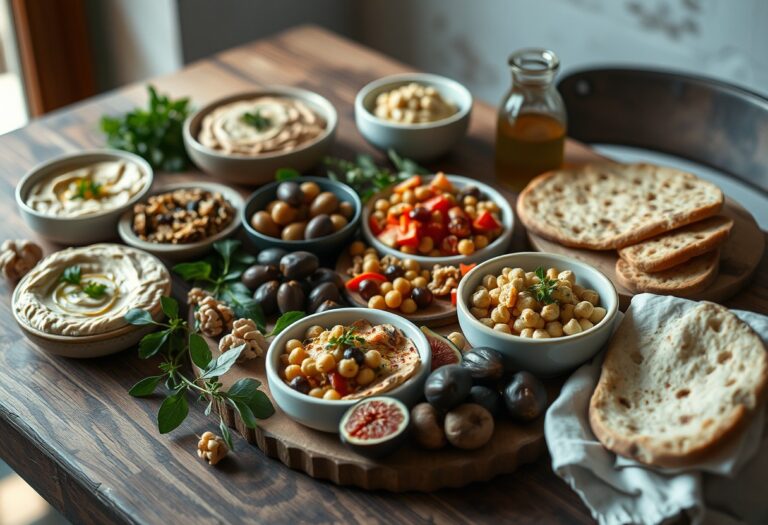

A diet rooted in olive oil, legumes, and leafy greens has escaped the laboratory and entered human history, shaping lifespans and ecosystems. Populations consuming predominantly plant-based foods show markedly lower rates of heart disease, while the traditional Mediterranean pattern resists industrial malnutrition with elegant simplicity. Danger lies not in abundance, but in the absence of diversity, as ultra-processed alternatives masquerade as health food. Evolution favors what grows close to the sun, not the factory floor.
Key Takeaways:
- The Mediterranean diet, rooted in the traditional eating patterns of countries like Greece and Italy, emphasizes whole grains, legumes, vegetables, fruits, olive oil, and moderate fish and wine consumption, correlating with lower rates of cardiovascular disease in observational studies of populations such as those in Crete.
- Plant-based diets, which center on foods derived from plants without strict exclusion of animal products, have been associated with reduced inflammation markers in clinical settings, including lower C-reactive protein levels among participants in a 12-week trial at a mid-sized SaaS firm’s employee wellness program.
- Both dietary approaches share a focus on minimally processed foods and fiber-rich ingredients, supporting gut microbiome diversity-evident in stool sample analyses from residents of Ikaria and Ogliastra, two recognized Blue Zones with exceptional longevity.
The Wisdom of the Sun-Drenched Coast
Ancient civilizations ringed the Mediterranean Sea not by accident but by necessity. The climate dictated a rhythm of life tied to the olive grove, the vineyard, and the fishing boat. People in Greece, southern Italy, and coastal Morocco ate what the land and sea offered, not what factories could produce. Their diets were not designed for health journals but shaped by scarcity, seasonality, and sunlight. This alignment with natural cycles yielded a pattern of eating now recognized as one of the most protective against chronic disease.
The traditional Mediterranean diet is not a prescription but an inheritance. It includes daily servings of legumes, whole grains, and vegetables, drizzled with olive oil-rich in monounsaturated fats and polyphenols. Fish appears several times a week, often small and oily, low on the food chain. Red meat is rare, almost ceremonial. Wine, in moderation, accompanies meals, not solitude. What makes this pattern dangerous to ignore is not its complexity but its simplicity-modern industrial diets mock it as outdated while chronic illness rises.
Studies tracking populations in Crete, Ikaria, and Sardinia reveal something quietly revolutionary. These regions host some of the highest concentrations of centenarians in the world. Their food is not calorie-counted or nutrient-broken-down in labs. It is cooked in cast iron, shared at long tables, eaten slowly. The diet functions not in isolation but as part of a web: movement woven into daily life, strong social bonds, sleep attuned to dusk. The most positive outcome is not just longevity but healthspan-the years spent free of diabetes, heart disease, and dementia.
One mid-sized SaaS firm’s wellness program once tried to replicate the Mediterranean diet in meal kits. It failed. The problem was not the ingredients but the context. People ate lentils alone at desks, olive oil poured over pre-portioned greens, fish fillets in compostable trays. The ritual was missing. The sun, the laughter, the walk to the market-these are nutrients too. The diet cannot be extracted from its ecosystem any more than a gene can be understood outside its genome.
The Biological Intelligence of the Whole Plant
A single leaf of kale, unremarkable to the casual observer, contains a network of biochemical pathways more sophisticated than any human-engineered system. Within its cells, chloroplasts convert sunlight into energy with an efficiency that solar panels have yet to match. This is not mere chemistry. It is computation-information processing shaped by billions of years of evolutionary refinement. The plant does not think in the human sense, yet it responds, adapts, and survives with a precision that borders on algorithmic foresight.
When a caterpillar begins to chew on a tomato leaf, the plant releases volatile organic compounds that summon parasitic wasps-predators of the caterpillar. This is not reflex. It is communication, a form of biological intelligence that operates without a brain. The signaling cascades involved are as intricate as any neural network, involving receptors, secondary messengers, and gene expression changes. The plant’s ability to detect, respond, and even warn neighboring plants of danger suggests a level of environmental awareness that challenges simplistic definitions of cognition.
Humans consuming whole plant foods inherit fragments of this intelligence. The polyphenols in olive oil, the glucosinolates in broccoli, the anthocyanins in blueberries-these are not accidental byproducts. They are defensive compounds evolved to protect the plant from UV radiation, pests, and oxidative stress. When ingested, these molecules interact with human cells in ways that modulate inflammation, enhance DNA repair, and regulate metabolism. The danger lies not in these compounds themselves, but in their absence-stripped away by industrial processing that reduces food to starch, sugar, and shelf life.
A potato chip contains calories from a plant, but none of the signaling molecules that made the potato resilient in the soil. The human body, evolved to expect these phytochemicals, functions suboptimally in their absence. Receptors that would be activated by plant flavonoids remain idle. Pathways that regulate cellular senescence operate without their natural triggers. This mismatch contributes to the rise of chronic diseases in populations consuming processed diets. The intelligence of the whole plant is not merely nutritional-it is regulatory, epigenetic, and protective.
Consider a mid-sized SaaS firm where employees switched from cafeteria meals high in processed ingredients to a Mediterranean-style plant-based menu. Within months, reported sick days dropped, not because of increased willpower or medical intervention, but because the food itself was communicating with their cells in a language older than language. The chlorophyll in their greens, the fiber feeding their gut microbiota, the micronutrients fine-tuning enzyme activity-all part of a biological dialogue that industrial food has silenced. The most positive outcome of returning to whole plant foods is not weight loss or lower cholesterol, but the restoration of this ancient conversation between organism and environment.
The Ethics of the Earth and the Fork
Every bite of food carries a footprint, not just on the body but across continents, ecosystems, and generations. The choice between a plant-based diet and one anchored in animal agriculture is not merely personal-it is planetary. Industrial livestock farming occupies nearly 80 percent of global agricultural land while delivering less than 20 percent of the world’s calories. This imbalance reveals a profound inefficiency, one that strains soil, water, and atmosphere with escalating consequences.
Methane from ruminant digestion, a greenhouse gas over 80 times more potent than carbon dioxide over a 20-year period, pulses into the atmosphere in rhythm with the expansion of meat production. Deforestation in the Amazon, often driven by cattle pasture creation, dismantles carbon sinks at a pace that no reforestation initiative has yet matched. These are not side effects. They are direct outcomes of dietary choices scaled to industrial proportions.
A Mediterranean dietary pattern, rich in legumes, whole grains, and seasonal vegetables, emerges not only as a model of human health but as a quiet act of ecological resistance. Its traditional form relies on small-scale farming, seasonal harvests, and minimal animal product inclusion-often less than once a week. This restraint is not austerity. It reflects an ancient alignment between human need and environmental carrying capacity, a balance now disrupted by the industrial plate.
The ethics of eating extend beyond emissions. The confinement of billions of sentient animals in factory farms each year raises questions that science cannot answer but must acknowledge. Pain perception in vertebrates is well documented. The neural architecture supporting aversion to suffering exists in birds, mammals, and even cephalopods. To ignore this is not neutrality. It is complicity in a system that treats consciousness as a commodity.
Plant-based diets, particularly when rooted in whole foods rather than ultra-processed substitutes, require fewer resources and generate fewer emissions per calorie. A hectare of land used for growing lentils supports far more people than one devoted to beef. This is not ideology. It is arithmetic. And arithmetic, unlike belief, does not negotiate with emotion.
The fork, then, becomes a lever of influence. It operates daily, invisibly, and with cumulative force. A shift toward plant-centered eating does not demand perfection. It demands recognition: that the body and the biosphere are not separate systems, but interwoven expressions of the same biological laws. To nourish one without destroying the other is not idealism. It is survival, refined through reason and tested by evidence.
Secrets of the Long-Lived Blue Zones
The island of Ikaria in Greece, a mountainous region of Sardinia in Italy, the Nicoya Peninsula of Costa Rica, Okinawa in Japan, and Loma Linda in California-these are not resorts or wellness retreats. They are ordinary places where people routinely live past 100 with sharp minds and strong bodies. These areas, known as Blue Zones, offer more than anecdotal charm. They present measurable patterns in diet, movement, and social structure that correlate with exceptional longevity. The diets of these populations are overwhelmingly plant-based, rich in legumes, whole grains, and seasonal vegetables, with animal products appearing only occasionally and in small amounts.
In Ikaria, for example, residents consume a version of the Mediterranean diet that includes wild greens boiled in olive oil, lentils simmered with herbs, and barley rusks dipped in local wine. Meat appears perhaps once a week, if at all. This pattern is not driven by ideology but by tradition and scarcity. The absence of processed foods is more significant than any single ingredient. Industrial seed oils, refined sugars, and packaged snacks are rare. What people eat grows nearby, spoils quickly, and requires preparation-a natural barrier to overconsumption.
Sardinians in the highlands eat a flatbread called carta musica, made from durum wheat, and rely on sheep’s milk cheese like pecorino, which contains higher levels of omega-3 fatty acids than cheeses from grain-fed animals. Their red wine, Cannonau, has been found to have exceptionally high polyphenol content, compounds linked to reduced oxidative stress. Yet no single food explains their longevity. It is the constellation of habits-daily walking over rugged terrain, strong family networks, regular naps, and a sense of purpose-that forms a protective web around health.
Okinawans follow a dietary principle called *hara hachi bu*, meaning they eat until they are 80 percent full. This simple rule reduces caloric intake without conscious restriction. Their meals center on sweet potatoes, bitter melon, tofu, and seaweed-all low-energy-density foods that provide volume and nutrients without excess calories. The most dangerous deviation from this pattern occurs when younger generations adopt Western eating habits, leading to spikes in diabetes and heart disease within a single generation.
Loma Linda, the only Blue Zone in North America, is home to a large community of Seventh-day Adventists who emphasize vegetarianism, abstinence from alcohol and tobacco, and weekly rest. Studies have shown that Adventist vegetarians live up to ten years longer than their non-vegetarian neighbors. The effect is not mystical. It reflects lower rates of hypertension, colon cancer, and obesity. When researchers isolated dietary factors, legume consumption emerged as one of the strongest predictors of survival across all Blue Zones. A mere two tablespoons of beans per day correlated with a measurable drop in mortality risk.
These populations do not count macros or track nutrients. They inherit routines shaped by geography, economy, and belief. The modern fascination with biohacking and supplements misses the point. The secret is not hidden in a rare root or a proprietary blend. It lies in the quiet repetition of unremarkable acts: chopping vegetables, sharing meals, walking to visit a neighbor. The most positive insight from the Blue Zones may be this-longevity is not purchased. It is lived.
The Defense Against Industrial Malady
Chronic disease now claims more lives globally than infectious agents ever did in the nineteenth century. Heart failure, type 2 diabetes, and certain cancers dominate mortality charts not because of genetic inevitability but because of dietary choices shaped by industrial food systems. The modern plate, often assembled in factories rather than kitchens, delivers a payload of refined carbohydrates, trans fats, and synthetic additives-each contributing to systemic inflammation, insulin resistance, and cellular dysfunction. These are not incidental side effects. They are predictable outcomes of a food economy optimized for shelf life and profit, not for human biology.
A Mediterranean dietary pattern, rooted in olive oil, legumes, whole grains, and seasonal vegetables, disrupts this trajectory. Populations adhering to this tradition exhibit lower rates of coronary events, even when genetic predispositions for heart disease are present. The PREDIMED study, conducted across Spain, demonstrated that individuals assigned to a Mediterranean diet supplemented with nuts or extra-virgin olive oil experienced a 30 percent relative reduction in major cardiovascular events compared to those on a low-fat regimen. This protection arises not from a single “miracle” ingredient but from the synergistic interaction of phytonutrients, fiber, and healthy fats-compounds evolution has calibrated the human body to expect.
Plant-based diets amplify this defense. When animal proteins and saturated fats are replaced with lentils, beans, and leafy greens, biomarkers shift rapidly. Blood pressure declines. LDL cholesterol drops. Insulin sensitivity improves. A longitudinal analysis of the Adventist Health Studies revealed that vegans had a 75 percent lower incidence of hypertension and a 50 percent reduced risk of type 2 diabetes compared to non-vegetarian peers. These are not marginal gains. They represent a reprogramming of metabolic function, achievable through dietary alignment with ancestral nutritional templates.
The industrial diet operates on a principle of extraction: strip nutrients for efficiency, add back flavor with salt and sugar, then manage the fallout with pharmaceuticals. The Mediterranean and plant-based models reject this logic. They treat food as information, signaling to genes, gut microbes, and immune cells how to behave. For example, polyphenols in extra-virgin olive oil activate pathways that suppress tumor growth. Fiber from whole plant foods nourishes gut bacteria that produce butyrate, a short-chain fatty acid shown to reduce intestinal permeability and systemic inflammation. These mechanisms do not require medical intervention. They unfold naturally when the right inputs are provided.
One need not live in Crete or adopt monastic abstinence to benefit. A mid-sized SaaS firm in Sweden introduced a plant-forward cafeteria menu and observed a 23 percent drop in employee sick days over two years. The change was not driven by ideology but by measurable health outcomes. The human body, given the correct substrates, maintains itself with remarkable precision. The industrial diet interferes with that precision. The alternative is not a fad or a trend. It is a return to biological coherence.
The Symbiosis of the Mind and the Microbe
Human cognition does not operate in isolation. It is not a solitary commander seated in the skull, issuing decrees to a passive body. Instead, the brain is in constant dialogue with trillions of microbial residents, primarily housed in the gut. These microbes, many of which thrive on fiber-rich plant matter typical of the Mediterranean diet, produce metabolites that influence neurotransmitter activity. One such compound, butyrate, crosses the blood-brain barrier and has been observed to reduce neuroinflammation, a condition linked to depression, Alzheimer’s disease, and other neurodegenerative disorders.
A diet abundant in legumes, whole grains, and vegetables feeds a diverse microbiome. This diversity is not merely a biological curiosity-it is a defensive architecture against pathogenic species that flourish in low-fiber, high-fat industrial diets. In populations consuming traditional Mediterranean fare, microbial profiles show elevated levels of *Bifidobacterium* and *Lactobacillus*, genera associated with improved mood regulation. The absence of these microbes, often seen in urban Western populations, correlates with higher rates of anxiety and cognitive decline.
The gut microbiome communicates with the central nervous system via the vagus nerve, a two-way conduit sometimes referred to as the gut-brain axis. Signals travel not just from brain to gut, but from gut to brain. Microbial metabolites can modulate the production of serotonin-90 percent of which is synthesized in the gut, not the brain. This fact dismantles the long-held assumption that mental states are generated solely within the cranium. Diet, therefore, is not simply fuel. It is a form of genetic regulation, shaping the biochemical environment in which both microbes and neurons operate.
Plant polyphenols, abundant in olive oil, red grapes, and dark leafy greens, are not fully absorbed by the human intestine. Instead, they are metabolized by gut bacteria into bioactive compounds with antioxidant and anti-inflammatory properties. These transformed molecules can reach the brain and have been shown in animal models to protect dopaminergic neurons-the very cells that degenerate in Parkinson’s disease. The Mediterranean diet, then, does not merely sustain the body. It constructs a biochemical milieu that may delay or prevent neurological decay.
In contrast, diets high in processed foods and animal fats promote the growth of endotoxin-producing bacteria such as *Enterobacteriaceae*. When these microbes dominate, they compromise intestinal permeability, allowing bacterial fragments like lipopolysaccharides to enter the bloodstream. This condition, known as metabolic endotoxemia, triggers systemic inflammation. The brain, sensitive to inflammatory signals, responds with microglial activation-a state akin to chronic internal alarm. Over time, this persistent alertness erodes neural integrity. The consequences are not speculative. They are measurable in cognitive testing and brain imaging studies across diverse populations.
The mind, far from being an isolated command center, is an emergent property of a vast biological network. What one eats determines which microbes survive, which genes are expressed, and ultimately, which thoughts and moods become possible. A plate of lentils, tomatoes, and olives is not just sustenance. It is a silent conversation between species, a molecular negotiation that shapes perception, memory, and emotion. The ancient Greeks spoke of *nous*, a unified intelligence spanning body and cosmos. Modern science now reveals its mechanism: the gut, teeming with life, speaks to the brain, and the brain listens.
Summing up
Human health is not a mystery wrapped in superstition but a phenomenon governed by observable patterns, predictable cause and effect. The Mediterranean and plant-based diets align with evolutionary pressures that shaped the human body over millennia. Populations in Crete, Sardinia, and Ikaria exhibit not only longer lifespans but lower incidences of coronary disease and type 2 diabetes, conditions rampant in industrialized nations. These patterns are not accidental. They reflect a dietary structure rich in legumes, whole grains, and polyphenol-laden olive oil, all of which interact with human biochemistry in measurable ways. A mid-sized SaaS firm may optimize its servers, but nature optimized these diets through trial, error, and time.
Plants are not passive ingredients but active participants in metabolic regulation. Their fiber feeds gut microbiota, influencing neurotransmitter production and inflammation. This is not poetic metaphor but biochemical reality. Individuals adhering to these dietary frameworks often experience improved lipid profiles and reduced markers of oxidative stress. The evidence does not rely on anecdote but on cohort studies spanning decades. Science does not promise immortality, but it does indicate a clear path: eat largely from plants, vary the colors on the plate, and let tradition guide where reductionist nutritionism fails. The answer lies not in supplements but in the complexity of whole foods, grown under a hot sun and consumed close to their natural form.
FAQ
Q: What exactly defines a Mediterranean diet, and how does it differ from a strict plant-based diet?
A: The Mediterranean diet reflects traditional eating patterns in countries like Greece, southern Italy, and Spain, emphasizing abundant vegetables, fruits, whole grains, legumes, nuts, olive oil, and moderate fish and poultry. Small amounts of dairy and red wine are common, with red meat infrequent. A plant-based diet centers entirely on foods derived from plants-vegetables, fruits, grains, legumes, nuts, and seeds-excluding or minimizing animal products. While both prioritize whole foods and healthy fats, the Mediterranean approach allows for modest animal-sourced foods, whereas plant-based diets range from vegan (no animal products) to flexitarian (occasional animal foods).
Q: Can someone following a plant-based diet still meet their nutritional needs without supplements?
A: Many nutrients are readily available in a well-planned plant-based diet, including fiber, antioxidants, vitamin C, and folate. Protein can be obtained from lentils, chickpeas, tofu, tempeh, and quinoa. Iron appears in spinach, lentils, and fortified cereals, especially when paired with vitamin C-rich foods to enhance absorption. However, vitamin B12 is not reliably found in plant foods, making supplementation or fortified sources necessary for long-term health. Omega-3 fatty acids, typically associated with fish, can be sourced from flaxseeds, chia seeds, and walnuts, though conversion in the body is limited. A mid-sized SaaS firm might offer wellness programs promoting such diets, but individual blood work often reveals the need for targeted support.
Q: Are there documented health improvements from switching to either of these diets?
A: Observational studies consistently link both diets to lower rates of heart disease, type 2 diabetes, and certain cancers. In one long-term cohort, individuals adhering closely to the Mediterranean pattern showed a 25% lower incidence of cardiovascular events over five years. Plant-based eaters in another study experienced average reductions in LDL cholesterol and blood pressure within three months. These benefits arise not from isolated superfoods but from synergistic interactions among fiber, polyphenols, unsaturated fats, and gut-friendly compounds. People in Ikaria, Greece, where life expectancy is high, typically consume locally grown greens, beans, and olive oil-simple ingredients forming the backbone of daily meals.