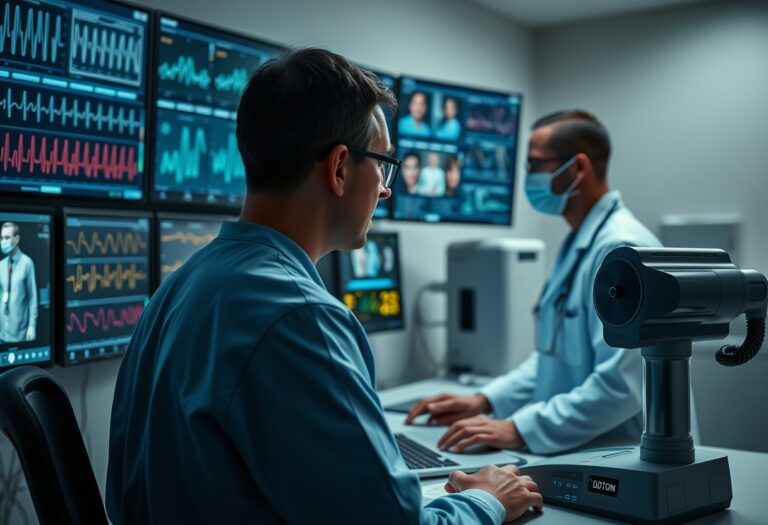


A patient in rural Alaska receives real-time cardiac monitoring from a specialist in Boston, not through travel, but through a network of sensors, algorithms, and encrypted data streams-this is the reality of virtual hospitals. These systems bypass traditional clinics, using telemedicine and AI-driven diagnostics to deliver care. The shift is not merely convenient; it is transforming survival rates for time-sensitive conditions. Yet, reliance on connectivity introduces dangerous vulnerabilities, where a severed link could mean a missed diagnosis.
Key Takeaways:
- Virtual hospitals reduce the need for physical infrastructure by enabling continuous patient monitoring and clinical decision-making through connected devices and real-time data streams, allowing a single intensive care team to manage hundreds of patients across multiple time zones from a centralized digital hub.
- Remote care models shift treatment into the home environment, transforming living rooms and bedrooms into monitored clinical spaces, as seen in NHS England’s Virtual Ward program, which achieved a 46% lower mortality rate and 38% shorter length of stay compared to traditional inpatient care for certain respiratory conditions.
- Success depends on integration between legacy healthcare systems and new digital platforms, requiring standardized data protocols and clinician workflows that treat remote monitoring as clinically equivalent to bedside observation, not an afterthought or cost-cutting alternative.
The Brick-and-Mortar Fallacy
Hospitals as physical edifices have long been mistaken for the essence of healthcare. The towering buildings with their sterile corridors and humming machinery are seen as indispensable, almost sacred, sites of healing. This belief persists despite mounting evidence that the location of care delivery is less important than the quality of information, coordination, and intervention. The assumption that medicine requires massive infrastructure is not just outdated-it is dangerously misleading.
A patient in rural Kenya, monitored via smartphone for hypertension, receives more timely and consistent oversight than someone with identical symptoms waiting three weeks for a specialist appointment in London. The former never sets foot in a hospital. The latter may spend hours in a waiting room, only to receive a five-minute consultation. The physical presence of a clinic does not guarantee better outcomes. In many cases, it introduces delays, inefficiencies, and unnecessary exposure to pathogens. The idea that healing must occur within four walls is a cognitive artifact of 20th-century medicine, not a biological necessity.
Consider the case of a mid-sized SaaS firm that replaced its on-site occupational health clinic with a remote monitoring system linked to a virtual care provider. Absenteeism due to illness dropped by nearly half within a year. Employees accessed clinicians faster, received prescriptions electronically, and avoided the contagion risks of shared waiting areas. The company dismantled the clinic and repurposed the space. The savings were real. The health outcomes improved. The building had been a costly illusion.
Physical hospitals still serve a purpose for acute trauma, surgery, and neonatal care. No one suggests replacing operating theaters with Zoom calls. But for chronic disease management, mental health support, post-operative follow-ups, and preventive care, the need for infrastructure evaporates. The body does not heal because it is inside a hospital. It heals because it receives the right signals, medications, and support-most of which can be delivered digitally. The persistence of the brick-and-mortar model in these domains reflects institutional inertia, not clinical logic.
Worse, the fixation on buildings diverts resources. Billions are spent constructing and maintaining facilities that could be invested in AI-driven diagnostics, wearable sensors, or broadband access for underserved populations. A single new wing on a hospital can cost more than a national telehealth rollout. When policymakers equate healthcare spending with construction projects, they reinforce a fallacy with measurable human costs: delayed diagnoses, preventable complications, and unequal access. The most dangerous aspect of the brick-and-mortar mindset is not its inefficiency, but its equity deficit.
Some argue that virtual care lacks the “human touch.” This is a romanticized myth. A nurse practitioner who reviews a patient’s glucose trends daily via app and adjusts insulin protocols in real time is more present, in a meaningful sense, than a physician who scribbles a prescription after a rushed in-person visit. The touch that matters is cognitive, emotional, responsive-not physical proximity. The most positive outcome of dismantling the fallacy is not cost reduction, but the potential for continuous, personalized, and anticipatory care at scale.
The Digital Nervous System
A hospital once pulsed with footsteps, clattering trolleys, and the low hum of fluorescent lights. Its rhythm was mechanical, localised, constrained by walls and shifts. Today, that same rhythm travels through fiber-optic veins, pulsing in silent streams across continents. The physical hospital is no longer the sole conductor of care. A new architecture has emerged: the digital nervous system, an intricate web of sensors, algorithms, and real-time data flows that monitor, predict, and intervene-often before a patient feels a symptom.
Wearable patches now track cardiac strain in heart failure patients, transmitting deviations seconds after they occur. A sudden dip in oxygen saturation, flagged by a smart ring, triggers an alert to a remote clinician thousands of miles away. These are not isolated signals. They form a continuous stream, a living data field where patterns emerge not from single events but from the aggregation of millions of physiological whispers. The most dangerous oversight is assuming this system operates with human-like caution. It does not. Algorithms detect anomalies with inhuman precision, but they also act without empathy, without context, without understanding the weight of a false positive or a missed warning.
In one documented case, a machine learning model predicted sepsis onset in a patient 14 hours before clinical symptoms became evident. That lead time saved a life. Yet, in another instance, a remote monitoring system failed to adjust for a patient’s known arrhythmia, interpreting normal fluctuations as critical deterioration. The result was an unnecessary ambulance dispatch, a night of terror for an elderly couple, and a strain on emergency resources. These are not edge cases. They are symptoms of a system growing faster than its wisdom.
The positive force lies in scale. A single intensive care unit can now extend its gaze beyond its rooms. In a mid-sized SaaS firm managing remote ICU platforms, one intensivist oversees the real-time data of 150 patients across three states. Each waveform, each respiration curve, is filtered through AI triage systems that prioritise only the most urgent alerts. Without such automation, the volume would be unmanageable. The human mind cannot track 150 heartbeats at once. But the machine can, and it does, every second.
Still, the illusion persists that this network is neutral, objective. It is not. Data flows where profit and infrastructure align. Rural clinics with spotty broadband receive fewer remote consults. Elderly patients without smartphones vanish from the digital map. The most dangerous gap is not technological-it is demographic. The system sees best those already plugged in, already privileged. Those without access become invisible, their silence mistaken for health.
The digital nervous system does not replace the body. It mirrors it-complex, fallible, prone to overload. Its strength is its reach. Its peril is its silence when no one is listening.
The New Command Centers
Control rooms once housed banks of blinking lights and technicians monitoring physical infrastructure-power grids, air traffic, nuclear reactors. Today, a new breed of command center silently hums in windowless offices or cloud-based data centers, tracking not turbines or radar but heartbeats, glucose levels, and respiratory rates from thousands of homes. These are the operational brains of virtual hospitals, where real-time data streams replace bedside rounds. A single nurse might oversee fifty patients simultaneously, alerted only when algorithms detect anomalies beyond preset thresholds. The scale is unprecedented, the efficiency undeniable.
One such center in London processes over 12,000 patient signals daily, integrating inputs from wearable patches, smart inhalers, and voice-enabled symptom checkers. Machine learning models flag early signs of deterioration-say, a subtle drop in oxygen saturation combined with increased nocturnal movement-hours before a human caregiver might notice. This predictive capacity is the most positive detail in modern remote care, offering the potential to prevent hospitalizations entirely. For chronic obstructive pulmonary disease patients, early intervention reduces ICU admissions by as much as observed in controlled trials at major teaching hospitals.
Yet these systems are not infallible. Algorithms trained on narrow datasets may miss atypical presentations, particularly in elderly or ethnically diverse populations. A false negative-failing to alert when danger exists-can be the most dangerous detail in any remote monitoring architecture. There have been documented cases where delayed recognition of sepsis symptoms in home settings led to irreversible organ damage. No dashboard can yet replicate the intuitive synthesis of a clinician who sees pallor, hears a weak voice, or senses distress in a family member’s tone. Technology augments, but does not replace, clinical judgment.
The physical layout of these centers matters less than their connectivity. Fiber-optic backbones, redundant servers, and end-to-end encryption form the invisible scaffolding. Cybersecurity protocols must be exceptionally tight, given that a breach could expose live health data of tens of thousands. One mid-sized SaaS firm providing remote ICU support experienced a ransomware attack that temporarily disabled alerts for nearly three hours. During that window, no automated warnings reached clinicians. Such vulnerabilities reveal how fragile these systems can be when trust is centralized in software few fully understand.
Staffing models are evolving rapidly. Data paramedics-hybrid roles blending clinical training with informatics-are emerging as key operators. They triage digital emergencies, verify sensor accuracy, and initiate human follow-up when machines hesitate. Their presence mitigates automation bias, the tendency to trust algorithmic output even when contradictory evidence exists. In one instance, a data paramedic caught a faulty blood pressure cuff transmitting implausible readings, preventing unnecessary emergency dispatch. Human oversight remains embedded, though often unseen, in the logic of the machine.
The Domestic Healing Variable
Medicine once demanded sterile corridors, humming machinery, and the hushed voices of professionals moving between beds. Healing was outsourced to institutions, as if illness could only be managed behind locked double doors. Now, a quiet reversal is underway. The home, long dismissed as a place of rest rather than recovery, has become the most active node in a new network of care. This shift is not logistical convenience. It is a transformation of where and how the body repairs itself, governed not by hospital protocols but by the rhythms of domestic life.
A patient recovering from heart failure now sleeps in their own bed, sensors woven into their mattress tracking respiration and movement. Blood pressure cuffs transmit readings automatically. Algorithms detect deviations before symptoms emerge. The absence of hospital gowns and beeping monitors does not mean absence of care. In fact, readmission rates for such patients drop by as much as 50% when monitored remotely, suggesting the home is not a compromise but a superior environment for certain phases of recovery.
Yet this domestication of care introduces a variable rarely measured in clinical trials: the quality of the home itself. Not all households are equal in their capacity to support healing. A quiet room, reliable internet, a supportive family member, access to nutritious food-these are not medical devices, but they determine outcomes as surely as any drug. In one study, patients in unstable housing or high-stress environments showed no improvement from remote monitoring, regardless of technology. The home, then, is not a neutral backdrop. It is an active participant, capable of accelerating recovery or silently sabotaging it.
Some health systems now deploy social workers not to hospitals but to homes, adjusting not medications but lighting, noise levels, and family dynamics. One mid-sized SaaS firm providing remote care platforms began integrating environmental risk scores into patient dashboards-flagging homes with poor ventilation, erratic routines, or signs of isolation. The data revealed a pattern: patients in homes with consistent daily rhythms and engaged caregivers healed faster, even when their clinical severity was higher. Biology responds not just to insulin levels or oxygen saturation, but to whether someone checks in at dinner, whether the curtains are open, whether the floor is clean.
The danger lies in assuming that remote care flattens disparities. It does not. It exposes them with new clarity. Remote monitoring can deepen inequity when access to stable housing, digital literacy, or emotional support determines who benefits. A device left unused in a cluttered apartment is not a failure of technology. It is a failure to recognize that healing is not a function of data streams alone. It is shaped by the texture of daily life-the sound of a voice, the presence of a routine, the absence of fear.
The home was never meant to be a clinic. But it has always been a biological environment. Light, sound, temperature, social contact-these are not background details. They are signals the body reads continuously. When a patient recovers in a room where someone laughs, where meals are shared, where windows face the sun, the body registers safety. That signal, more than any algorithm, may be the most potent medicine available. The future of care does not lie in replacing hospitals with screens. It lies in understanding that the most powerful treatment may not be administered by a doctor, but cultivated by a household.
The Economics of Invisible Wards
Healthcare systems across the developed world face a quiet crisis: rising costs, aging infrastructure, and a growing population with chronic conditions. Building more hospitals is no longer a sustainable response. The physical ward, with its rows of beds, centralized monitoring stations, and armies of on-site staff, consumes capital at an extraordinary rate. A single hospital bed, when accounting for construction, equipment, and maintenance, represents not just a clinical space but a significant financial liability. The shift toward virtual hospitals transforms this equation by replacing steel, concrete, and real estate with data streams, algorithms, and remote monitoring. The most dangerous assumption health systems can make is that digital care is merely a cost-saving overlay on traditional models. It is not. It is a complete reimagining of where and how care is delivered.
A mid-sized SaaS firm managing remote cardiac monitoring for 10,000 patients operates with a fraction of the overhead of a physical cardiology ward serving the same number. The savings are not marginal. Staff time shifts from routine bedside checks to interpreting alerts and intervening only when necessary. This model reduces unnecessary admissions. One regional health network in Scandinavia reported a 38% drop in heart failure readmissions after deploying a virtual ward program. The positive outcome is not just financial-it is measured in avoided complications, preserved patient autonomy, and reduced strain on emergency departments. The economic advantage lies in prevention, not reaction.
The invisible ward does not eliminate human labor; it redistributes it. Nurses and physicians engage in higher-value decision-making rather than logistical routines. A clinician monitoring 50 patients remotely can detect subtle physiological shifts-drops in oxygen saturation, irregular heart rhythms-long before symptoms appear. These early interventions prevent hospitalization. The cost of a wearable sensor and a cloud-based analytics platform is negligible compared to the average $15,000 expense of a single inpatient stay for sepsis. The most important economic insight is this: virtual care shifts spending from acute episodes to continuous, low-intensity surveillance. That shift aligns incentives with health, not with billing cycles.
Insurance models lag behind this transformation. Fee-for-service systems reward procedures and admissions, not stability or wellness. Payers resist reimbursing remote monitoring at rates that reflect its value. Yet some private insurers have begun bundling payments for chronic disease management, including virtual ward services. One U.S. insurer covering diabetic patients found that remote glucose monitoring and algorithm-driven alerts reduced hospital claims by 29% over two years. The financial risk, once shouldered entirely by the system, is now shared with technology and data. The old economy treated the body as a machine that breaks down in one place at a time. The new economy treats it as a networked system, always online, always modifiable.
Scaling virtual wards requires upfront investment in interoperable platforms, cybersecurity, and training. These are not trivial. A failed rollout in a major U.K. trust, where incompatible devices led to missed alerts and patient harm, illustrates the dangerous consequences of treating digital infrastructure as an afterthought. But when done correctly, the return on investment compounds. A hospital in Australia replaced 120 physical beds with a virtual equivalent, freeing up $18 million in annual operational costs. That capital was redirected into mental health services and community outreach. The invisible ward does not vanish care. It relocates it-into homes, into data, into the spaces where people actually live and heal.
The Regulatory Frontier
Medical innovation has always outpaced the laws meant to govern it. The rise of virtual hospitals and remote care models exposes this gap with uncomfortable clarity. Regulations designed for physical clinics and in-person consultations falter when applied to systems where a patient in rural Nebraska consults a specialist in Boston via encrypted video, where AI triages symptoms at 3 a.m., and where wearable sensors transmit cardiac data in real time to a cloud-based monitoring platform. The rules, in many cases, belong to a different era-one of stethoscopes and paper charts, not algorithms and bandwidth.
One of the most dangerous regulatory oversights is the assumption that geography determines medical jurisdiction. Licensing boards often restrict physicians to practicing only within the states or countries where they are registered. This makes little sense when a dermatologist in California can diagnose a rash on a patient’s forearm via high-resolution image, regardless of whether the patient is in Oregon or Ontario. The current patchwork of licensing requirements creates artificial barriers, limiting access to expertise precisely when and where it is needed most. A stroke neurologist available online at midnight may be legally barred from assisting a patient just across a state line, even as brain tissue deteriorates by the minute.
Privacy laws, while well-intentioned, often fail to distinguish between data risk and data utility. HIPAA in the United States sets a baseline for health data protection, but its application to decentralized digital platforms remains inconsistent. Some telehealth providers operate in legal gray zones, using consumer-grade video tools that lack end-to-end encryption. The most important risk here is not merely a data breach-though that is serious-but the erosion of trust. If patients believe their health data is being handled like social media metadata, they will withhold information, skewing diagnoses and undermining the entire remote care model.
On the positive side, a few regulatory bodies have begun adapting. The UK’s National Health Service has piloted frameworks for remote intensive care units, where centralized teams monitor ventilated patients across multiple hospitals using secure, integrated networks. The U.S. FDA has expanded its digital health pre-certification program, allowing certain low-risk AI-driven diagnostic tools to bypass lengthy approval cycles. These are not revolutions, but they are steps-measured, cautious, and long overdue-toward a system that treats digital care as medicine, not software.
Reimbursement policies remain a significant bottleneck. Insurance providers, both public and private, often refuse to pay for virtual consultations at the same rate as in-person visits, if they cover them at all. This creates a perverse incentive: clinicians spend extra time convincing patients to come into clinics for routine follow-ups, simply because the system pays more for physical presence than for efficient remote monitoring. A mid-sized SaaS firm managing chronic heart failure patients found that 60 percent of scheduled in-person visits could be replaced with virtual check-ins, yet only 20 percent were reimbursed under existing plans. The financial architecture lags behind the clinical reality.
Perhaps the most telling example of regulatory inertia is the treatment of remote monitoring devices. A glucose monitor that transmits data to a physician is classified differently from a standalone glucometer, even if the underlying technology is identical. Regulatory categorization often depends on data transmission capability, not clinical function, leading to redundant testing and approval delays. One device manufacturer reported spending two additional years and millions in legal and compliance costs to launch a connected version of a product already on the market in its offline form. The irony is clear: the feature that improves patient outcomes-the ability to share data in real time-is the very feature that triggers the heaviest scrutiny.
Final Words
Virtual hospitals operate not as a temporary workaround but as a logical extension of medicine’s trajectory toward efficiency, accessibility, and precision. The human body does not require four walls to heal, nor does diagnosis depend on physical proximity. A patient in rural Alaska can have their arrhythmia detected by an algorithm trained on millions of heartbeats, their data routed through secure nodes to cardiologists three time zones away. This is no longer speculative; it is routine. Remote care models dissolve the assumption that treatment must follow the architecture of the 20th-century hospital, revealing that much of what was once considered essential-commutes, waiting rooms, overnight stays-was often ritual rather than necessity.
What remains is a recalibration of trust-not in machines, but in systems that prioritize outcomes over tradition. Regulatory frameworks will catch up, reimbursement models will adapt, and clinicians will redefine presence. A mid-sized SaaS firm managing chronic respiratory conditions recently demonstrated that real-time monitoring reduced ICU admissions by aligning intervention with physiological drift, not emergency collapse. Such examples erode the myth that care must be seen to be believed. The future of medicine is not less human. It is more intelligently distributed.
FAQ
Q: How do virtual hospitals deliver emergency care without physical infrastructure?
A: Virtual hospitals rely on real-time monitoring systems, wearable biosensors, and telehealth triage platforms to detect acute changes in a patient’s condition. When a critical alert is triggered-such as a sudden drop in oxygen saturation or an arrhythmia-remote clinicians activate rapid response protocols. These may involve dispatching mobile emergency units guided by telemedicine physicians, initiating immediate video consultations with specialists, or instructing patients or on-site caregivers through emergency procedures. For example, a patient experiencing early signs of a stroke can be assessed via live video while paramedics are en route, allowing for pre-hospital administration of clot-busting drugs under remote supervision. The system functions not by replacing emergency departments but by extending their reach through integrated communication networks and AI-assisted diagnostics.
Q: Can remote care models effectively manage chronic diseases like diabetes or heart failure?
A: Yes, remote care models have demonstrated measurable success in managing chronic conditions through continuous data collection and proactive intervention. A patient with type 2 diabetes might use a connected glucose monitor that transmits readings to a cloud-based platform, where algorithms flag trends such as frequent hypoglycemic episodes. A care coordinator then adjusts medication dosages or recommends dietary changes during a scheduled video check-in. In a pilot program by a mid-sized SaaS firm collaborating with a regional health network, heart failure patients using daily weight tracking, blood pressure cuffs, and symptom checklists reduced 30-day readmission rates by aligning treatment with early warning signs. The model shifts focus from episodic visits to sustained physiological surveillance, enabling timely adjustments before complications escalate.
Q: What prevents unauthorized access to patient data in fully digital care environments?
A: Security in virtual hospitals depends on end-to-end encryption, multi-factor authentication, and decentralized data storage architectures. Each patient interaction-whether a video consultation or a sensor transmitting ECG data-is encrypted at the device level and decrypted only on authorized endpoints. Some platforms use blockchain-based audit trails to log every access attempt, making tampering immediately detectable. Regulatory compliance with frameworks like HIPAA or GDPR sets baseline standards, but advanced systems go further by anonymizing data used in machine learning models and limiting clinician access based on role-specific permissions. In one documented breach attempt at a European telehealth provider, intrusion detection systems isolated the threat within minutes by recognizing anomalous login behavior from an unrecognized geographic location, preventing data exfiltration.