


With a deeper understanding of our health, I can share how the kidneys are fundamental in regulating Vitamin D metabolism. You might be surprised to learn that these vital organs convert inactive Vitamin D into its active form, which is crucial for calcium absorption and bone health. If your kidneys are not functioning properly, this process can be hindered, leading to potential deficiencies that may affect your overall health. Let’s explore how your kidneys contribute to this important metabolic pathway and what it means for your well-being.
The Biochemical Pathway of Vitamin D Activation
The activation of Vitamin D is a complex biochemical pathway that begins with its synthesis in the skin through ultraviolet (UV) radiation exposure. This process generates Vitamin D3 (cholecalciferol), which then undergoes an initial transformation in the liver before the kidneys finalize its activation, converting it to the biologically active form, calcitriol. This multi-step process illustrates the vital coordination between different organs to ensure that Vitamin D fulfills its role in calcium homeostasis and bone health.
The Role of the Liver in Initial Metabolism
Once Vitamin D is synthesized in the skin or ingested through dietary sources, it travels to the liver where it is converted into 25-hydroxyvitamin D (25(OH)D) through the action of specific enzymes. This form is notably significant, as it serves as the primary circulating form of Vitamin D in the body and acts as a reliable indicator of Vitamin D status during clinical assessments, as levels can be measured in the blood efficiently.
The Kidneys as the Final Conversion Site
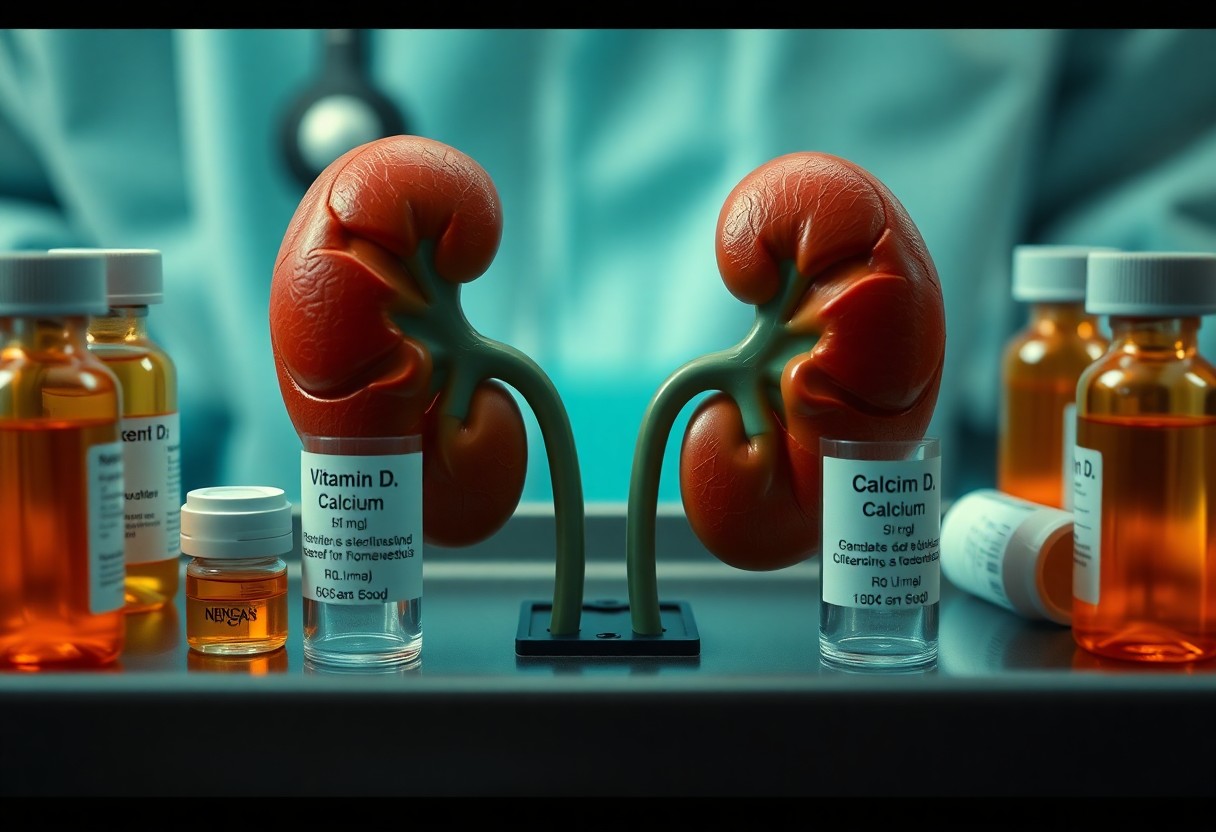
The kidneys play a pivotal role in the final conversion of 25-hydroxyvitamin D into the active form, 1,25-dihydroxyvitamin D (calcitriol). This conversion occurs primarily in the renal proximal tubules and is catalyzed by the enzyme 1α-hydroxylase, which is sensitive to various physiological factors such as parathyroid hormone and calcium levels. When calcium levels are low, the kidneys increase the conversion rate, thereby promoting calcium absorption in the intestines and resorption in the bones, ensuring that your body maintains adequate calcium levels.
In the kidneys, under physiological regulation, 1α-hydroxylase is crucial because it adjusts the production of calcitriol based on your body’s needs. For instance, if your serum calcium concentration decreases, parathyroid hormone stimulates the enzyme, leading to an increase in calcitriol synthesis. This amplification not only enhances intestinal calcium absorption but also facilitates bone resorption when necessary, illustrating how finely tuned the kidneys are in adjusting Vitamin D levels in response to the body’s changing needs. Without proper kidney function, these regulatory mechanisms can falter, leading to deficiencies or imbalances that impact overall health.
The Kidneys’ Multifaceted Role in Calcium Homeostasis
The kidneys play a multifaceted role in maintaining calcium homeostasis, which is vital for various bodily functions, including muscle contraction and nerve transmission. This is achieved through the filtration and reabsorption of calcium and phosphate in the renal tubules. By adjusting the excretion of these minerals based on dietary intake and physiological needs, the kidneys help maintain stable serum calcium levels that are vital for health.
Regulation of Calcium and Phosphate Levels
Calcium and phosphate levels are tightly regulated by the kidneys, which modulate their excretion based on the body’s requirements. When calcium levels drop, the kidneys decrease excretion, promoting reabsorption, whereas an increase in serum calcium induces greater excretion of calcium and phosphate, preventing hypercalcemia. This balance is vital for maintaining bone health and overall physiological stability.
Interaction with Parathyroid Hormone
The kidneys interact closely with parathyroid hormone (PTH), which is released when calcium levels are low. PTH stimulates the kidneys to reabsorb more calcium from urine and enhances the conversion of vitamin D to its active form, promoting intestinal absorption of calcium. Additionally, PTH reduces phosphate reabsorption, ensuring that calcium and phosphate levels remain balanced in the bloodstream.
The role of parathyroid hormone in kidney function is vital not just for calcium regulation but also for overall mineral balance. Increased PTH levels lead to enhanced renal tubular reabsorption of calcium while simultaneously causing the kidneys to excrete more phosphate, an vital mechanism to prevent the formation of calcium phosphate crystals. This interplay ensures your bones receive adequate calcium while preventing potential complications such as calcification of soft tissues. Understanding this relationship helps us appreciate the kidneys’ vital contribution to our body’s mineral balance and overall health.
Hormonal Influence: How Vitamin D Affects Kidney Function
Vitamin D’s influence on kidney function is profound, providing a pathway through which this hormone enhances overall renal health. Its action not only promotes calcium absorption but also affects renal hormonal activities. By regulating the synthesis of hormones such as renin, Vitamin D may help improve blood pressure control and fluid balance, ultimately supporting the kidneys’ ability to filter waste products effectively.
Upregulation of Renal Receptors
Vitamin D exerts a significant influence by upregulating specific renal receptors, particularly the vitamin D receptor (VDR) in kidney cells. This interaction enhances the reabsorption of calcium and phosphate, ensuring optimal mineral balance. Through this mechanism, your kidneys can respond more efficiently to changes in dietary nutrient intake and maintain better overall homeostasis.
Impact on Kidney Health and Functionality
The impact of Vitamin D on kidney health and functionality extends beyond mineral balance; it is linked to reduced risk factors for chronic kidney disease (CKD). Studies indicate that adequate Vitamin D levels correlate with improved kidney function and a lower incidence of complications like glomerulosclerosis, thereby improving your overall quality of life.
In detail, maintaining adequate Vitamin D levels fosters an environment where kidney cells can operate at peaked performance. This vitamin assists in preventing the progression of kidney damage and plays an important role in modulating inflammation and oxidative stress within renal tissues. Individuals with deficient levels may experience an increased risk of developing conditions that could compromise kidney health. Hence, ensuring proper Vitamin D metabolism can contribute significantly to the longevity and functionality of your kidneys.
The Consequences of Impaired Kidney Function on Vitamin D Metabolism
Kidney dysfunction can significantly disrupt Vitamin D metabolism, primarily through the impaired conversion of calcidiol to calcitriol, the active form of Vitamin D. As kidney function declines, the diminished capacity to produce calcitriol leads to reduced calcium absorption in the intestines, resulting in potential deficiencies and mineral imbalances. Consequently, patients with compromised kidneys often experience bone loss, weakness, and an increased risk of fractures. Additionally, without adequate Vitamin D levels, impairments in immune function can occur, further exacerbating overall health issues.
Vitamin D Deficiency and Its Wider Effects
Vitamin D deficiency extends beyond bone health, impacting various physiological functions. Inadequate levels are linked to increased risks of cardiovascular disease, respiratory infections, and metabolic disorders. Studies have shown that low Vitamin D status correlates with heightened inflammation and a compromised immune response, contributing to a cycle of poor health outcomes, particularly in individuals with existing kidney disorders. Addressing this deficiency becomes necessary to improving overall health and wellness.
The Bidirectional Relationship Between Kidney Disease and Vitamin D Status
The relationship between kidney disease and Vitamin D status is mutually influential. Impaired kidney function can lead to Vitamin D deficiency, while low Vitamin D levels can also exacerbate kidney disease progression. For instance, insufficient Vitamin D may contribute to secondary hyperparathyroidism, worsening kidney disease through increased calcium and phosphate imbalances. This ongoing cycle indicates the need for careful management of Vitamin D levels in patients with renal issues to promote better health outcomes.
Delving deeper into this bidirectional relationship reveals complex interactions between Vitamin D and kidney health. Research has demonstrated that administration of active Vitamin D analogs in patients with chronic kidney disease can help mitigate some of the detrimental effects on bone metabolism and cardiovascular health. Conversely, managing kidney disease effectively may lessen the incidence of Vitamin D deficiency, leading to a better quality of life and reduced complications associated with both conditions. A balanced approach in monitoring and addressing Vitamin D levels is necessary for optimal patient care, but it requires collaborative efforts and a thorough understanding of individual health circumstances.
Clinical Implications and Recommendations for Kidney Health
Kidney health plays a vital role in Vitamin D metabolism, impacting not just bone health but overall physiological function. Given that impaired kidney function can lead to diminished activation of Vitamin D, I recommend monitoring kidney function alongside Vitamin D levels in those at risk. Regular check-ups and tailored dietary adjustments can help mitigate complications associated with Vitamin D deficiency.
Monitoring Vitamin D Levels in Renal Patients
Regularly monitoring Vitamin D levels in renal patients is vital to avoid associated complications such as bone pain, fractures, and cardiovascular issues. Blood tests measuring 25-hydroxyvitamin D (25(OH)D) and parathyroid hormone (PTH) can provide a comprehensive view of your Vitamin D status and its effects on calcium metabolism. This regular assessment allows for timely intervention when deficiencies occur.
Strategies for Supplementation and Dietary Intake
Effective strategies for Vitamin D supplementation are critical for individuals with compromised kidney function. Since dietary sources alone may not suffice, I encourage discussing individualized supplementation plans with a healthcare provider, using either ergocalciferol or cholecalciferol depending on your needs. Aiming for a balanced diet that incorporates fortified foods, fatty fish, and UV-exposed mushrooms can also increase your dietary intake of this vital nutrient.
Incorporating Vitamin D-rich foods into your daily regimen can significantly support your overall health. Fatty fish such as salmon and mackerel provide not only Vitamin D but also omega-3 fatty acids, which may benefit kidney health. Additionally, fortified dairy and plant-based milk, as well as eggs, can enhance your intake. For many, supplementation might be necessary; the typical dosage ranges from 800 to 2000 IU daily, but individual needs may vary based on existing health conditions. Always consult your healthcare provider to determine the appropriate strategy tailored for your specific situation.
Final Words
Presently, I understand that the kidneys play an imperative role in vitamin D metabolism by converting its inactive form into the active hormone calcitriol. This activation process ensures that calcium and phosphate levels in your body are properly regulated, which is vital for bone health and overall well-being. By comprehending this relationship, you can appreciate how your kidney health directly impacts your vitamin D status and, consequently, your overall health. Maintaining kidney function is vital, as it supports your body’s ability to metabolize vitamin D efficiently.
FAQ
Q: What is the primary function of the kidneys in the metabolism of Vitamin D?
A: The kidneys play a vital role in the activation of Vitamin D. Initially, Vitamin D is obtained through sunlight exposure, diet, or supplements in its inactive form. The liver then converts it to 25-hydroxyvitamin D, which is still inactive. The kidneys further convert this metabolite into its active form, calcitriol (1,25-dihydroxyvitamin D), through the action of the enzyme 1-alpha-hydroxylase. This active form is crucial for calcium and phosphate balance in the body and supports various physiological functions.
Q: How do kidney diseases affect Vitamin D metabolism?
A: Kidney diseases can significantly hinder the conversion of Vitamin D into its active form. Damaged kidneys often fail to produce adequate levels of the enzyme 1-alpha-hydroxylase, leading to decreased production of calcitriol. This deficiency can result in various health issues, including impaired absorption of calcium and phosphate, which may ultimately lead to bone disorders, such as osteomalacia or osteoporosis. Individuals with kidney disease may require Vitamin D supplementation or active Vitamin D analogs to maintain healthy levels.
Q: What can individuals do to support their kidney function and, consequently, their Vitamin D metabolism?
A: To support kidney health and promote effective Vitamin D metabolism, individuals can adopt a balanced diet rich in fruits, vegetables, whole grains, and healthy fats. Staying well-hydrated and maintaining a healthy weight can also benefit kidney function. Regular exercise is crucial for overall health. Furthermore, individuals should monitor their blood pressure and blood sugar levels, as hypertension and diabetes are major risk factors for kidney disease. For those at risk or already affected, it is advisable to work closely with healthcare professionals to manage their condition and optimize Vitamin D levels.