


There’s a fascinating interplay between fibroblast growth factor 23 (FGF23) and Vitamin D metabolism that can significantly impact your health. In this post, I’ll probe how FGF23 regulates the metabolism of Vitamin D, influencing its activation and overall availability in your body. Understanding this relationship is key, as it can shape your approach to managing conditions related to calcium and phosphate balance. Join me as I unravel the mechanisms behind this important hormonal interaction and its implications for your well-being.
The Role of FGF23 in Phosphate Metabolism
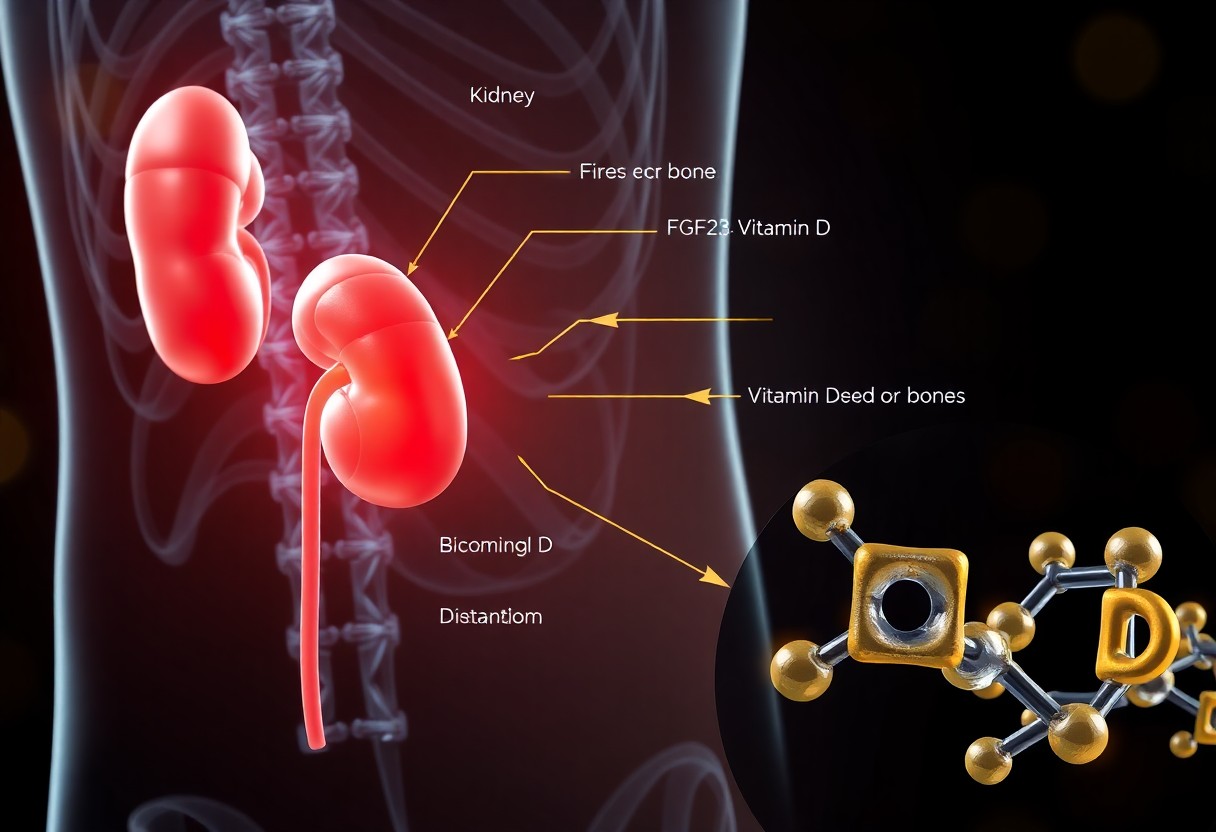
FGF23 plays a pivotal role in the regulation of phosphate metabolism, acting primarily to lower serum phosphate levels. Elevated levels of FGF23 stimulate the kidneys to excrete phosphate, thereby reducing its concentration in the blood. Additionally, FGF23 inhibits the activity of 1-alpha-hydroxylase, the enzyme responsible for converting 25(OH)D into its active form, 1,25-dihydroxyvitamin D. This dual action helps maintain phosphate homeostasis and prevents conditions such as hyperphosphatemia, often seen in individuals with chronic kidney disease.
Mechanisms of FGF23 Action
The action of FGF23 is largely mediated through its binding to specific receptors located in the kidneys and parathyroid glands. When FGF23 binds to its receptor, it activates downstream signaling pathways that lead to increased renal phosphate excretion and decreased synthesis of 1,25(OH)2D. This complex mechanism underscores FGF23’s critical role in both phosphate regulation and vitamin D metabolism, highlighting its significance in the broader context of mineral homeostasis.
The Interplay Between FGF23 and Renal Function
FGF23’s role in renal function is particularly significant as it helps prevent the buildup of phosphate in cases of impaired kidney function. In healthy individuals, the kidneys effectively clear excess phosphate, but compromised renal function can hinder this process. As FGF23 signals the kidneys to excrete phosphate, its levels can rise in response to declining renal capacity, creating a delicate balance that is crucial for maintaining phosphate equilibrium and preventing further kidney damage.
This interplay between FGF23 and renal function reveals a complex relationship—when kidney function declines, FGF23 levels typically increase in an effort to regulate phosphate excretion. However, if the kidneys cannot respond adequately due to dysfunction, elevated FGF23 can lead to excessive phosphate retention, contributing to mineral bone disorders and cardiovascular complications. Therefore, understanding FGF23’s role becomes crucial for managing patients with chronic kidney disease, as keeping its levels in check is key to mitigating associated risks.
The Connection Between FGF23 and Vitamin D Synthesis
FGF23’s influence extends beyond phosphate regulation; it directly impacts Vitamin D metabolism. By modulating key enzymes involved in Vitamin D synthesis, FGF23 plays a significant role in how your body utilizes this necessary nutrient. Understanding this connection can provide insights into conditions characterized by altered FGF23 and Vitamin D levels, leading to broader implications for overall health and well-being.
FGF23’s Regulatory Effect on 1α-Hydroxylase
FGF23 regulates the enzyme 1α-hydroxylase, which is responsible for converting 25-hydroxyvitamin D to its active form, calcitriol. By inhibiting this enzyme, FGF23 reduces the synthesis of calcitriol, ultimately affecting calcium metabolism and bone health. This regulation is a key mechanism through which FGF23 can influence your Vitamin D status.
Impact of FGF23 on 25-Hydroxyvitamin D Levels
FGF23’s modulation of Vitamin D metabolism also extends to levels of 25-hydroxyvitamin D, the main circulating form of Vitamin D in the blood. Elevated FGF23 levels can lead to reduced concentrations of 25-hydroxyvitamin D, which is necessary for maintaining optimal bone health and metabolic functions in your body. This relationship highlights the delicate balance between FGF23 and Vitamin D synthesis.
A study indicates that individuals with higher FGF23 levels often present with lower 25-hydroxyvitamin D concentrations. This correlation suggests a feedback mechanism where increased FGF23 not only diminishes calcitriol production via 1α-hydroxylase inhibition but may also increase the demand for Vitamin D to maintain bone health. Understanding this dynamic is necessary for managing conditions such as chronic kidney disease, where both FGF23 and Vitamin D pathways can become dysregulated, emphasizing the need for monitoring and potential supplementation strategies.
Consequences of Altered FGF23 Levels on Bone Health
Changes in FGF23 levels can significantly impact bone health, primarily through its effects on phosphate metabolism and Vitamin D synthesis. An elevation in FGF23 is often linked to conditions such as chronic kidney disease, where it leads to altered mineral homeostasis, increasing the risk for disorders like osteomalacia and osteoporosis. Understanding how these alterations occur helps in addressing potential therapeutic strategies to mitigate their effects on the skeleton.
The Influence of Hyperphosphatemia
Hyperphosphatemia, commonly resulting from elevated FGF23 levels, poses a significant risk to bone health by altering the balance of minerals necessary for bone formation and resorption. Excess phosphate can lead to aberrant calcium dynamics, triggering unwanted bone remodeling processes and ultimately compromising structural integrity.
Bone Mineralization and Osteoporosis Risks
When FGF23 levels are disrupted, the delicate process of bone mineralization is adversely affected, potentially elevating the risk of developing osteoporosis. Deficient mineralization leads to brittle bones that are more susceptible to fractures, highlighting the tangible consequences of altered FGF23 activity.
As the process of bone mineralization relies heavily on phosphate and calcium, insufficient levels of either nutrient due to high FGF23 can precipitate osteoporotic changes. When your bones are unable to effectively incorporate these minerals, they can become more porous and weaker over time. A study demonstrated that individuals with chronic kidney disease, characterized by elevated FGF23 and subsequent hyperphosphatemia, exhibit decreased bone mineral density, underscoring the importance of balanced FGF23 levels for maintaining robust skeletal health.
Therapeutic Implications of Targeting FGF23
Targeting FGF23 presents a promising therapeutic avenue for managing Vitamin D metabolism-related disorders. By inhibiting FGF23 activity, we might enhance Vitamin D synthesis and improve mineral homeostasis, particularly in individuals suffering from chronic kidney disease or other conditions associated with altered FGF23 levels. Innovative therapies focusing on controlling FGF23 production or action could potentially alleviate Vitamin D deficiency and its associated health risks.
Potential Treatments for Vitamin D Deficiency
Addressing Vitamin D deficiency may involve novel strategies that specifically reduce the effects of FGF23. For instance, phosphate binders that mitigate FGF23 secretion and Vitamin D enhancers could work synergistically to improve overall vitamin status. The development of specific FGF23 antagonists could likewise help patients achieve optimal Vitamin D levels, enhancing bone health and lowering the risk for various metabolic conditions.
FGF23 as a Biomarker for Chronic Kidney Disease
FGF23 levels can serve as a valuable biomarker for chronic kidney disease (CKD), indicating impaired renal function and phosphate handling. Measuring FGF23 not only helps assess the severity of CKD but also assists in predicting complications associated with mineral and bone disorders. Elevated FGF23 concentrations have been correlated with increased mortality risk in CKD patients, emphasizing the need for routine monitoring to guide therapeutic interventions.
In chronic kidney disease, FGF23 acts as a response to rising phosphate levels due to reduced renal excretion. Elevated FGF23 levels signify the kidneys’ struggle to maintain phosphate balance, which in turn links to the suppression of Vitamin D activation. As FGF23 accumulates, it serves as an early indicator of CKD severity, allowing healthcare providers to tailor interventions more effectively. Monitoring FGF23 levels can help in proactively managing potential complications and is vital for optimizing patient outcomes in CKD management.
Future Research Directions: Unraveling the Complexities
Investigating the relationship between FGF23 and Vitamin D metabolism demands an interdisciplinary approach, harnessing advances in biochemistry, genetics, and population health. Future studies could focus on understanding the diverse mechanisms through which FGF23 operates, potentially leading to innovative treatments for conditions caused by FGF23 dysregulation. Comprehensive analysis of these interactions across varied populations will help unveil the nuances of FGF23’s role and how it can be targeted therapeutically.
Investigating the FGF23-Vitamin D Axis in Diverse Populations
Researching the FGF23-Vitamin D axis in diverse populations is vital for comprehending differential responses to FGF23. By examining various demographics, including age, ethnicity, and health status, I can gather insights on how these factors influence FGF23 levels and Vitamin D metabolism. This understanding could pave the way for personalized treatment strategies, ensuring effective management of Vitamin D-related disorders tailored to specific patient profiles.
Advanced Genomic Studies and FGF23 Signaling Pathways
Advanced genomic approaches are important for decoding the intricacies of FGF23 signaling pathways. By utilizing cutting-edge techniques like CRISPR-Cas9 gene editing and high-throughput sequencing, I can identify genetic variants that modulate FGF23 activity and its impact on Vitamin D metabolism. Such studies will illuminate potential biomarkers for disease risk and treatment outcomes, ultimately enhancing our strategies for managing Vitamin D insufficiency and related disorders.
- Understand key signaling pathways involving FGF23 and their implications.
- Explore genetic variants influencing FGF23 regulation and Vitamin D metabolism.
- Examine population-specific responses to FGF23 interventions.
- Identify novel biomarkers linked to FGF23 and Vitamin D disorders.
| Key Goals of Study | Description |
|---|---|
| Decipher FGF23 Pathways | Focus on understanding the cellular mechanisms by which FGF23 regulates Vitamin D synthesis and metabolism. |
| Genetic Insights | Utilize genomic technologies to pinpoint genetic variations affecting FGF23 activity across populations. |
Advanced genomic studies facilitate a deeper understanding of the FGF23 signaling pathways, revealing how specific genes influence this critical interaction. I aim to apply sophisticated genomic techniques to uncover relationships between genetic variants and response to FGF23 regulation. Identifying these genetic factors could potentially highlight new diagnostic and therapeutic targets that enhance the management of Vitamin D-related conditions while fostering personalized medicine practices.
- Utilize CRISPR technology for gene editing.
- Apply high-throughput sequencing for comprehensive analysis.
- Investigate gene-environment interactions affecting FGF23 levels.
- Study epigenetic modifications associated with FGF23 dysregulation.
| Future Directions | Potential Outcomes |
|---|---|
| CRISPR Applications | Possible breakthroughs in understanding how FGF23 alters Vitamin D metabolism at a molecular level. |
| Epigenetic Research | Insights into how external factors influence FGF23 activity and Vitamin D homeostasis. |
Summing up
With this in mind, I recognize that Fibroblast Growth Factor 23 (FGF23) plays a significant role in regulating Vitamin D metabolism. Its primary function is to inhibit the synthesis of active Vitamin D and promote the excretion of phosphate, affecting bone health and mineral balance. You should consider how FGF23’s modulation of Vitamin D may influence your overall health, particularly in conditions such as chronic kidney disease. Understanding this relationship is imperative for managing Vitamin D levels and ensuring optimal bodily function.
FAQ
Q: What is the role of fibroblast growth factor 23 (FGF23) in the regulation of Vitamin D metabolism?
A: FGF23 is a hormone produced primarily by osteocytes in response to elevated phosphate levels. It plays a significant role in the regulation of Vitamin D metabolism by inhibiting 1-alpha-hydroxylase, the enzyme responsible for converting 25-hydroxyvitamin D into its active form, calcitriol. This inhibition leads to reduced levels of calcitriol, which in turn affects intestinal absorption of calcium and phosphate and influences overall mineral homeostasis in the body.
Q: How does elevated FGF23 levels affect Vitamin D status in individuals?
A: When FGF23 levels are elevated, which can occur in conditions such as chronic kidney disease or disorders of phosphate metabolism, there is a decrease in the synthesis of active Vitamin D. This reduced production of calcitriol can lead to lower absorption of calcium and phosphate from the diet, potentially resulting in secondary complications such as hypocalcemia and hypophosphatemia. Consequently, individuals may experience bone health issues, such as osteomalacia or rickets, due to inadequate Vitamin D status.
Q: Can FGF23 levels influence the therapeutic approach to Vitamin D supplementation?
A: Yes, FGF23 levels can significantly influence the effectiveness of Vitamin D supplementation. For individuals with high FGF23, simply increasing Vitamin D intake may not sufficiently elevate active Vitamin D levels due to FGF23’s inhibitory effect on its metabolism. Therefore, treatment approaches may need to be tailored, potentially including phosphate supplements or the use of active forms of Vitamin D (like calcitriol) to counteract the effects of elevated FGF23 and improve mineral balance and overall health.